

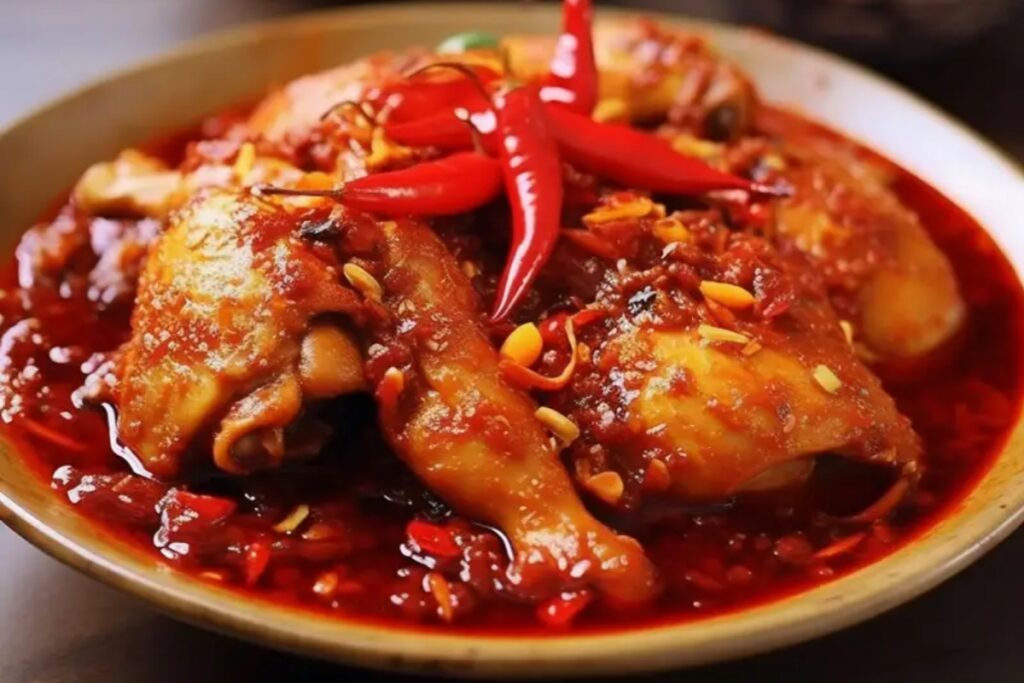
There’s a specific moment at a Nigerian party that anyone who’s been to one will remember immediately. The food has been out for a while. The jollof rice is half gone, the fried plantain is disappearing fast, and then someone carries out a fresh tray of peppered chicken. The skin is dark and glistening, coated in a deep reddish orange pepper sauce that is slightly caramelized at the edges from the grill. The smell hits before the tray does. The crowd shifts.
That chicken is what this article will help you make.
Here’s the honest problem with most peppered chicken recipes you find online: they either treat it as a marinate and grill situation (where the pepper sauce burns before the chicken is done), or they grill the chicken plain and serve the pepper sauce on the side (which misses the point entirely). The result in both cases is something that tastes like grilled chicken with hot sauce, not authentic Nigerian peppered chicken.
The real technique has two stages. You build the char first, on dry heat, without the sauce. Then, you glaze with the pepper sauce and finish over indirect heat so the sauce cooks into the skin rather than scorching on the grates. It’s not complicated, but nobody seems to be teaching it, and that’s exactly what this guide is for.
By the end of this article, you will understand what Nigerian peppered chicken actually is, where it comes from, how the pepper sauce works, and how to grill it at home so it tastes like it came off a real party grill, not a weeknight improvisation.
What Is It?
Nigerian peppered chicken is a grilled or fried chicken dish coated in a cooked pepper sauce made from blended scotch bonnet peppers, tatashe (red bell or romano peppers), and onions. The sauce is reduced until thick and deeply flavored, then brushed over the chicken during the final stage of cooking. This allows it to adhere to the skin and char lightly at the edges, creating a layered flavor that’s simultaneously smoky, spicy, savory, and slightly sweet from the tatashe.
The dish sits in an interesting middle ground in Nigerian cooking. It’s not suya. Suya is a dry rub situation street food served on skewers with raw onion on the side. Peppered chicken uses a wet sauce, and that sauce is the defining element. It’s also not the same as Nigerian chicken stew, where the chicken cooks inside the sauce. In peppered chicken, the chicken is fully cooked by the time the sauce touches it, which means the sauce’s job is to add flavor and texture, not to cook the meat through.
This distinction matters practically: it’s why the two stage method works, and why single-stage methods consistently disappoint.
History and Culture
Peppered chicken as a distinct dish became a fixture of Nigerian urban food culture through the growth of the restaurant and pepper soup bar scene in Lagos and Abuja during the 1990s and 2000s. These were informal eating spots sometimes just a covered outdoor space with plastic tables, a coal pot, and a cook with an enormous pot of pepper sauce serving chicken, fish, and goat in various states of grill and pepper. The “peppered” category eventually consolidated around the specific technique of grilling first and saucing second, which delivered a more complex result than simply boiling meat in pepper soup.
At Nigerian parties, peppered chicken became a status dish, a sign that the host took the food seriously enough to grill fresh chicken rather than relying only on the stew pot. The visual impact of a platter of glossy, sauce coated grilled chicken is part of its appeal at events. It photographed well even before phones were a primary concern, and it holds at room temperature better than soupier dishes.
The pepper sauce itself draws directly from Nigeria is deep tradition of pepper based cooking. Scotch bonnet peppers called ata rodo in Yoruba are the primary heat source in southern Nigerian cooking, used in stews, soups, rice dishes, and sauces. Tatashe, the large red pepper that tempers the scotch bonnet’s raw heat with sweetness and body, is the sauce is structural backbone. Together, they form one of the fundamental flavor pairings in Nigerian cuisine, the same one that underpins jollof rice, Nigerian chicken stew, and countless other recipes.
A food fact worth knowing: tatashe is not widely known outside West Africa by that name, but it belongs to the same family as the Italian long sweet pepper and the Spanish pimiento. If you have eaten Nigerian food and found that the pepper sauce has a depth beyond straight chili heat, tatashe is usually the reason.
Ingredients
Getting the ingredients right is especially important in peppered chicken because the sauce is simple. There is nowhere for poor sourcing or wrong ratios to hide.
| Ingredient | What It Does |
| Chicken pieces (bone-in, skin-on thighs and drumsticks) | Bone in cuts stay moist through the two stage cook. The skin crisps on the grill and holds the pepper sauce glaze without becoming soggy. |
| Scotch bonnet peppers (ata rodo) | The primary heat source: fruity, fiercely hot, and completely irreplaceable in flavor. Use habaneros as a substitute if unavailable, starting with fewer. |
| Tatashe (red bell or romano peppers) | Adds body, natural sweetness, and deep color to the sauce. It balances the scotch bonnet’s raw heat so the sauce tastes layered rather than just hot. |
| Onion | Forms the savory base of the sauce. Half goes into the blender, and half is sautéed in the oil before the blended peppers are added. |
| Vegetable oil | Used to fry down the blended sauce. The oil separates to the top when the sauce is correctly reduced, a visual cue that the sauce is ready. |
| Seasoning cubes (Maggi or Knorr) | The umami anchor of virtually every Nigerian sauce. It adds a savory depth that salt alone doesn’t provide. |
| Curry powder and dried thyme | The classic Nigerian chicken seasoning pairing, applied to the chicken in the dry seasoning stage before grilling. |
| Garlic and fresh ginger | Blended into the chicken’s wet marinade or seasoning paste. Adds aromatic warmth and cuts through the fat of the skin. |
| Lime or lemon juice | Used during the chicken cleaning stage to freshen the meat before seasoning a standard practice in Nigerian chicken prep. |
| Salt | Used in layers on the chicken during seasoning and in the sauce during reduction. |
On sourcing: Scotch bonnet peppers are available in most Caribbean and African grocery stores. If you genuinely cannot find them, habanero peppers are the closest substitute in both heat level and flavor. Start with half the quantity, since habaneros can run slightly hotter than scotch bonnets depending on the batch. Tatashe can be substituted with a regular red bell pepper, which gives a milder, less earthy result but still delivers the color and sweetness the sauce needs.
Step by Step Instructions: Nigerian Peppered Chicken
- Serves: 4–6
- Active prep time: 30 minutes | Marinade time: 2 hours minimum, overnight preferred | Cook time: 45–55 minutes total (including par-boiling and grilling)
Ingredients
For the chicken:
- 8 bone-in, skin-on chicken pieces (thighs and drumsticks)
- Juice of 1 lime
- 1 teaspoon curry powder
- 1 teaspoon dried thyme
- 3 cloves garlic, minced
- 1 teaspoon fresh ginger, grated
- 1 seasoning cube (Maggi or Knorr), crushed
- Salt to taste
- 2 tablespoons vegetable oil
For the pepper sauce:
- 4 scotch bonnet peppers (reduce to 2 for medium heat)
- 3 large tatashe or red romano peppers (or 2 large red bell peppers)
- 1 medium onion, halved
- 3 tablespoons vegetable oil
- 1 seasoning cube, crushed
- Salt to taste
- ½ teaspoon curry powder
Cooking Process
Stage One: Season and Parboil the Chicken
- Clean the chicken: Rinse all pieces, squeeze the lime juice over them, rub it in, and then pat dry. This freshens the meat and lightly opens the surface for seasoning a standard Nigerian kitchen step before cooking begins.
- Season: In a bowl, mix the curry powder, thyme, minced garlic, grated ginger, crushed seasoning cube, and a pinch of salt into a paste with the vegetable oil. Score each chicken piece 2–3 times down to the bone with a sharp knife, then rub the paste into every surface and into the cuts. Cover and refrigerate for a minimum of 2 hours, or overnight if you have time.
- Par-boil: Place the seasoned chicken in a pot with all the remaining marinade and enough water to come one-third of the way up the pieces. Bring to a boil over high heat, then reduce to a simmer and cook for 18–22 minutes, turning once. Cook until the chicken is about 80% cooked through opaque all the way but not yet firm. Remove from the pot and let it rest on a rack. Keep the cooking liquid; it’s a seasoned stock worth saving for jollof rice or soup.
Stage Two: Make the Pepper Sauce
- Blend the peppers: Combine the scotch bonnet peppers, tatashe, and half the onion in a blender with a very small splash of water. Blend until smooth. The sauce should be thick and deeply colored almost like a loose paste, not watery.
- Fry the sauce down: Finely dice the remaining onion half. Heat 3 tablespoons of oil in a wide saucepan or sauté pan over medium-high heat. Fry the diced onion for 3–4 minutes until softened and starting to color. Carefully pour in the blended pepper mixture, as it will spit. Stir to combine, then add the crushed seasoning cube, curry powder, and salt. Cook over medium heat, stirring every few minutes, for 18–25 minutes until the sauce has lost its raw smell, darkened in color, and thickened considerably. When the oil separates to the surface and the sauce looks glossy rather than wet, it’s ready. Taste and adjust the seasoning. It should be bold, slightly sweet from the tatashe, and carry a real kick from the scotch bonnet.
Stage Three: Grill and Glaze
- Set up your grill: Heat a charcoal or gas grill to medium-high. Set up two zones: one directly over the heat source and one off to the side for indirect heat. Brush the grates with a little oil to prevent sticking.
- First, char without sauce: Place the parboiled chicken pieces skin side down over direct heat. Grill for 4–5 minutes until the skin is properly charred and has grill marks, then flip and grill the other side for 3–4 minutes. Do not add any sauce yet. This stage is purely about building a smoky, charred exterior and crisping the skin. Adding sauce now would cause it to burn before the chicken finishes cooking.
- Glaze and finish: Move all pieces to the indirect heat zone. Brush generously with the cooked pepper sauce, coating every surface. Close the grill lid and cook for 8–10 minutes. Open, brush with a second coat of sauce, and close the lid for another 5 minutes. The sauce should be caramelized at the edges and firmly adhered to the skin not wet or runny, but slightly tacky and glistening.
- Rest and serve: Remove from the grill and let it rest for 5 minutes before plating. Plate on a wide tray or board and spoon any remaining warm sauce over the top. Serve immediately.
Expert Tips
- Cook the pepper sauce until the oil floats. This is the visual indicator experienced Nigerian cooks use: when you see the red oil separating to the surface, the sauce has cooked long enough for the raw pepper taste to disappear and the flavors to integrate. Glazing with undercooked sauce is one of the most common reasons homemade peppered chicken tastes off.
- Always char before you glaze. The order is non-negotiable: dry heat first to build the crust, sauce second to build the flavor coating. Reversing this burns the sauce and leaves the skin pale and steamed underneath.
- Score deep, down to the bone. This helps the seasoning penetrate all the way through during the parboil stage, not just on the surface. Peppered chicken without scoring is seasoned on the outside but bland in the middle.
- The sauce’s thickness matters. If your sauce is too thin when you glaze, it will run off the chicken and drip onto the coals, causing flare ups and leaving the chicken pale and unsauced. It should be thick enough to coat the back of a spoon before it goes anywhere near the grill.
- Rest the chicken before serving. Five minutes off the grill allows the juices to settle back into the meat. If you cut into it immediately, the juices will run right out.
- Keep back a portion of sauce for plating. Never put all your sauce directly on the grill; set aside a third of it before glazing to spoon over the finished chicken at the table. This intensifies the flavor and keeps the presentation glossy.
Variations
Oven Grilled Peppered Chicken
After par-boiling and seasoning, arrange the pieces on a foil-lined baking rack. Roast at 425°F (220°C) for 18–20 minutes until the skin is properly charred, then flip and roast for another 10 minutes. Brush generously with the cooked pepper sauce and return to the oven for 8 minutes. Finish under the broiler for 3–4 minutes until the sauce caramelizes. This method yields a texture very close to the grilled version and is far easier to manage for a large indoor batch.
Air Fryer Peppered Chicken
Par-boil as directed. Air fry at 390°F (200°C) for 12–14 minutes, turning once, until the skin is crisp and charred at the edges. Brush with the pepper sauce and air fry for a final 4–5 minutes. This works best with drumsticks and wings, as the smaller surface area gets properly crisp.
Peppered Chicken Wings
Reduce the parboil time to 12 minutes for wings. Use the same sauce and the same two-stage method. Wings take less time on the grill: 3 minutes per side over direct heat, and 6 minutes glazed over indirect heat. These are ideal for party appetizers because they can be prepared in large batches. The sauce-to-surface ratio is naturally higher on wings, which means more flavor in every bite.
Extra Spicy Version
Double the scotch bonnet peppers and add one habanero or a small red chili to the blend. The heat level increases significantly, so consider this version only for guests who can handle serious spice. A teaspoon of ground crayfish in the sauce adds a savory, slightly briny depth that holds up well against the extra heat.
Smoky Tomato Based Peppered Chicken
A southern Nigerian variation adds 2 medium fresh tomatoes to the blender alongside the peppers and onion. The tomato slightly mellows the pepper sauce and adds an acidity that works well with fattier cuts. This version is more common in home cooking than in restaurant or party settings.
Serving Suggestions
Peppered chicken has clear natural partners in Nigerian cooking. Jollof rice is the classic pairing. The tomato and pepper base of the rice echoes the sauce on the chicken without duplicating it, making a memorable plate. White rice with a bowl of the reserved pepper sauce on the side is a simpler, equally satisfying option.
Fried plantain (dodo) is almost non-negotiable as a side; its sweetness cuts directly through the heat of the scotch bonnet in a way that feels intentional rather than accidental. A cold, Nigerian-style coleslaw (lightly dressed with mayonnaise and a little fresh pepper) adds crunch and a temperature contrast.
For a more casual meal, pile the chicken onto a wide wooden board with raw sliced onions, sliced tomatoes, and extra pepper sauce in a bowl on the side, the informal presentation used at Nigerian parties and suya spots. The raw onion is not just decorative; it genuinely cuts the richness of the charred, sauced skin and makes you want another piece.
Storage Guide
- Refrigerator: Store cooked peppered chicken in an airtight container for up to 4 days. Store any extra pepper sauce separately in a sealed jar; it keeps for up to 5 days refrigerated and works as a condiment, a cooking sauce for eggs, or a base for other dishes.
- Freezer: Cooked chicken pieces freeze well for up to 3 months. Freeze them individually on a tray first, then transfer them to bags so they don’t stick together. The pepper sauce also freezes well in ice cube trays for convenient, single use portions.
- Reheating: Heating the chicken on a hot grill or cast iron skillet at medium-high for 3–4 minutes per side restores most of the skin’s crispness, which a microwave destroys. If reheating in the oven, bake at 400°F (200°C) for 12–15 minutes uncovered. A spoonful of fresh pepper sauce over the top at serving time revives both the flavor and appearance.
- Pepper sauce shelf life: Once the oil has properly separated during cooking, the sauce is stable at room temperature for several hours. This is particularly helpful if you’re managing a party spread. Refrigerate after 3 hours for food safety.
Health Benefits
Peppered chicken is one of the more nutritionally balanced dishes in Nigerian cooking. Bone-in chicken thighs and drumsticks provide a meaningful amount of protein–roughly 22–25 grams per piece, depending on the size along with iron, zinc, and B vitamins. The collagen in bone-in cuts, which breaks down during parboiling, has been associated with joint health and gut lining support in ongoing nutritional research.
The pepper sauce delivers a dense package of micronutrients. Scotch bonnet and other chili peppers are exceptionally high in vitamin C-ounce for ounce, significantly higher than citrus fruits. Capsaicin, the compound responsible for their heat, has a well-documented research profile linking it to anti-inflammatory effects and metabolic support. Tatashe peppers contribute beta carotene (the compound that gives them their orange-red color), which the body converts to vitamin A. Onions, which form the sauce’s savory base, add quercetin, a flavonoid associated with reduced inflammation.
The main nutritional consideration is the skin. Chicken skin cooked with oil adds significant saturated fat; removing it after cooking preserves the flavor built during grilling while reducing the fat content considerably. The dish is naturally low in carbohydrates and pairs well with lower-glycemic sides, like leafy vegetables or a light salad, if health is a priority.
FAQs
What is Nigerian peppered chicken made of?
The two main components are grilled or fried bone-in chicken pieces and a cooked sauce made from blended scotch bonnet peppers, tatashe (red bell peppers), and onion. The chicken is seasoned with a standard Nigerian dry blend curry, thyme, garlic, ginger, and seasoning cubes before being grilled. The sauce is cooked separately and applied to the chicken in the final stage of cooking.
How is peppered chicken different from suya?
Suya uses a dry rub of ground peanuts, paprika, and spices (yaji) and is typically made with thinly sliced, boneless meat on skewers, grilled fast over high heat with no sauce. Peppered chicken uses bone-in pieces and a cooked, wet pepper sauce applied during grilling, and it usually involves a par-boil step for thorough cooking. While their flavor profiles overlap in spice and smoke character, their textures and sauce structures are distinct.
Do you have to parboil chicken before making peppered chicken?
You don’t have to, but it’s strongly recommended. Parboiling first means the chicken is cooked through before it ever hits the grill, so the grill’s only job is building the crust and smoking the exterior. This produces better results than trying to cook raw chicken all the way through while managing a pepper sauce glaze. For bone in thighs and drumsticks in particular, parboiling is almost always worth the extra 20 minutes.
What peppers are used in Nigerian peppered chicken?
Scotch bonnet peppers (ata rodo) provide the heat and the fruity, complex pepper flavor. Tatashe, a large red pepper common in West African cooking, provides body, sweetness, and the deep orange-red color. Both are blended together with onion to make the sauce base. The ratio of tatashe to scotch bonnet controls how hot the final dish is; a 3:1 or 4:1 ratio of tatashe to scotch bonnet gives strong heat without overwhelming the other flavors.
How do you make peppered chicken sauce thicker?
Cook it longer. The sauce thickens as water evaporates and the natural sugars in the peppers concentrate. The visual cue to watch for is the oil separating and rising to the top of the sauce; this means enough water has cooked off for the sauce to be dense and stable. If your sauce is still thin after 20 minutes, increase the heat slightly and keep stirring until you see the oil separate.
Can I make Nigerian peppered chicken without a grill?
Yes. The oven grill method roasting at 425°F (220°C), then broiling for the final few minutes to char the skin produces results very close to outdoor grilling. A cast-iron grill pan on the stovetop also works and gives actual grill marks. The main thing you lose without charcoal is the smoky depth, which you can partially compensate for by adding a very small amount of smoked paprika to the dry chicken seasoning.
How spicy is Nigerian peppered chicken?
It is genuinely spicy if made as written. Scotch bonnet peppers are among the hottest peppers in regular cooking use, with Scoville ratings between 100,000 and 350,000 units. The tatashe in the sauce mellows the heat considerably, but this is not a mild dish. Reduce the scotch bonnet quantity by half for a medium-heat version, or use only tatashe and one deseeded scotch bonnet for a mild version that still delivers the sauce’s color and flavor character.
What do you serve with Nigerian peppered chicken?
Jollof rice and fried plantain (dodo) are the classic pairings. White rice with extra pepper sauce works equally well. A simple coleslaw adds crunch and cooling contrast. Sliced raw onions and tomatoes on the side are traditional and genuinely functional, as they balance the richness of the sauced skin.
Conclusion
Nigerian peppered chicken is one of those dishes that seems more complicated than it is. The two stage technique char first, glaze second is the single piece of information that closes the gap between a home attempt that tastes fine and one that tastes like it came off a real party grill. The pepper sauce, cooked until the oil separates and the raw pepper smell is completely gone, then applied to properly charred skin over indirect heat, is what makes the difference. Everything else the overnight marinade, the par-boil, the scoring serves that final result.
Make the sauce ahead of time if you can. Season the chicken the night before. Give yourself a full hour on the day itself, without rushing the grill. The first time you carry that tray out the skin glossy and dark, the pepper sauce caramelized at the edges, the smell of scotch bonnet and char you will understand why it goes so fast at every Nigerian party you’ve ever been to.



Leave a Feedback