

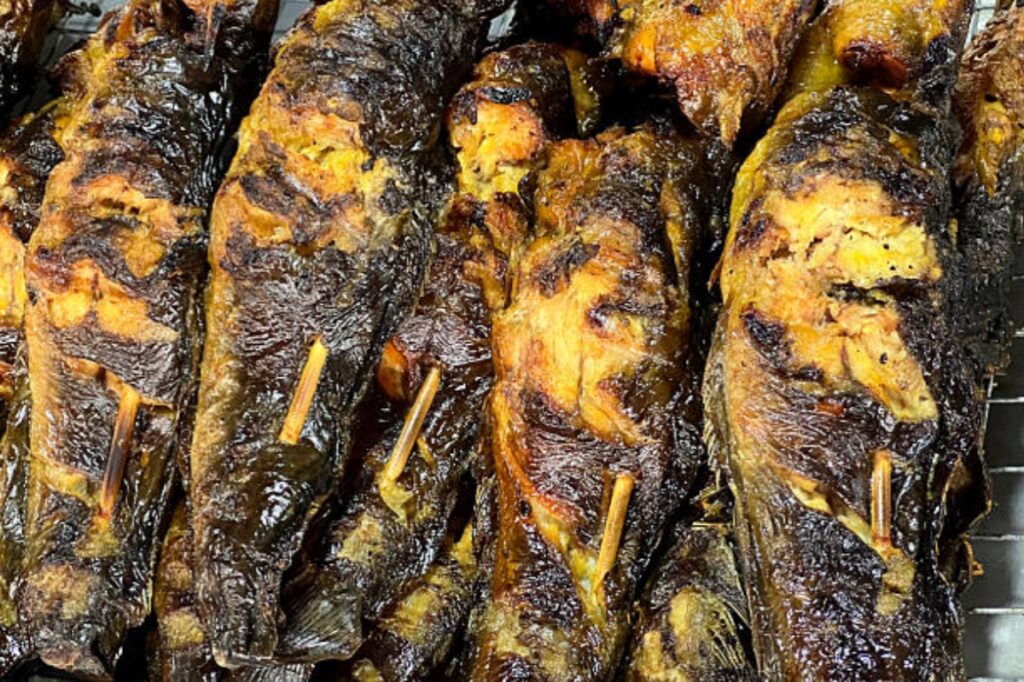
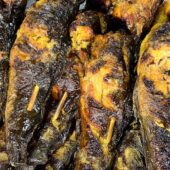
Picture a point and kill joint on a Saturday evening, rows of shallow tanks holding live catfish, someone walking over and pointing at the one they want, and twenty minutes later, that same fish arrives at the table whole charred at the edges, glistening with a pepper marinade, and the flesh pulling cleanly off the bone.
That’s the dish this guide teaches you to recreate at home.

Most home attempts at this dish fall short for one of two reasons. The first is a muddy, slightly off flavor that no amount of pepper can fully cover almost always because the fish slime layer was never properly cleaned off before cooking. The second is a torn, sticking mess on the grill because a whole fish behaves completely differently than a chicken thigh or a boneless fillet, and most recipes do not explain the difference.
This article fixes both. You will learn what “point and kill” actually means, where the tradition comes from, the specific cleaning technique that solves the muddy-taste problem for good, and a whole-fish grilling method that will not leave half your dinner stuck to the grates. This is a genuinely different approach from the Old Bay and fillet grilled catfish recipes you will find in most places online. It uses a whole fish, an authentic wet pepper marinade, and a technique built around West African cooking, not American Southern cooking.

What Is It?
Nigerian grilled catfish is a whole catfish cleaned, scored, and rubbed with a marinade of blended scotch bonnet peppers, tatashe, ginger, garlic, and ground crayfish grilled over charcoal or gas until the skin is charred and the flesh is fully cooked through but still moist. It is most commonly associated with “point and kill,” the practice at Nigerian restaurants and bukas where live catfish are kept in tanks or shallow ponds, and customers choose their fish before it is cleaned, seasoned, and cooked to order.
Point and kill joints typically prepare catfish in three different ways, and it is worth knowing all three so you understand exactly where this recipe fits. The first is grilled with a pepper marinade rubbed directly onto the skin and scored flesh the version this article covers. The second is baked or steamed whole in foil with a wetter, more liquid pepper sauce poured over it, which is closer in spirit to a sauce based dish than a grilled one. The third is catfish pepper soup, where the fish is simmered in a spiced broth rather than grilled at all, a completely different eating experience that is more of a soup than a centerpiece. All three come from the same pepper and crayfish flavor tradition, but they are distinct dishes, and conflating them is one of the more common points of confusion for people trying this at home for the first time.
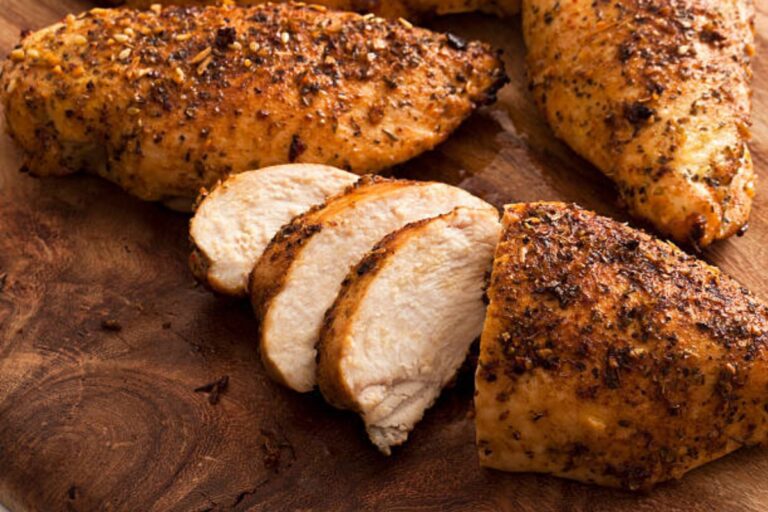
The biggest structural difference from Western grilled catfish recipes is the cut and the marinade. Most American grilled catfish recipes use boneless fillets with a dry spice rub Old Bay, paprika, garlic powder cooked quickly and simply. Nigerian grilled catfish uses the whole fish, bone-in and skin-on, with a wet, blended pepper marinade rubbed into scored cuts and left to sit before grilling. The technique, flavor, and presentation are built around a completely different set of priorities.
History and Culture
“Point and kill” sounds, to anyone hearing it for the first time, like it belongs to hunters or soldiers rather than a dinner order. The name is a bit of a joke that stuck: you point at a live fish swimming in a tank, and it gets cleaned, seasoned, and cooked while you wait, usually with music playing and a cold drink in hand. It is less a menu item than a whole evening, a social event built around fresh fish, casual company, and the theater of picking your dinner while it is still alive.
The tradition is strongest in Lagos and Port Harcourt, though point and kill spots exist across Nigeria’s major cities. It draws heavily on the food culture of the Niger Delta and South-South region, where catfish farming and river fishing have long been part of daily life. Catfish specifically became the centerpiece of this culture because it is meaty, widely farmed, tolerant of the shallow holding tanks these restaurants use, and large enough that one fish can comfortably feed a small group for practical reasons as much as culinary ones.
Here is a food fact that actually explains part of why the tradition works the way it does: African catfish can survive out of water for a surprisingly long time. They have an accessory breathing structure that lets them tolerate low oxygen water and, in the wild, even wriggle short distances over wet ground between ponds during the rainy season. That biological quirk is a big part of why point and kill restaurants can keep catfish alive in relatively shallow, low flow tanks for days, something that would be impossible with most other fish.
Grilled fish holds a specific place at Nigerian gatherings that is a little different from the role grilled chicken plays. Where grilled chicken shows up at big, structured events, weddings, birthdays, and owambes grilled catfish is more associated with casual, social, evening out eating: meeting friends after work, a weekend hangout, and the kind of meal that is as much about the occasion as the food. It is less formal, more communal, and often eaten with your hands straight off a shared plate.
Ingredients
Catfish do not have scales, their skin is smooth, protected by a layer of natural mucus instead. That single biological fact is the reason the cleaning step in this recipe exists at all, and it is worth keeping in mind as you read through the ingredient list below.
| Ingredient | What it does |
| Whole catfish (2.5-3 lbs / 1.2-1.4 kg), gutted | The centerpiece bone-in and skin-on for maximum flavor and the classic point and kill presentation. |
| Coarse salt and lime or lemon juice | Used specifically for cleaning, not seasoning this combination breaks down and lifts the mucus layer that causes a muddy taste if left on. |
| Scotch bonnet peppers | The primary heat source; fruity and fierce, blended into the marinade. |
| Tatashe (red bell or romano peppers) | Adds sweetness, body, and deep color, balancing the scotch bonnet’s raw heat. |
| Onion | Blended into the marinade for moisture and a savory base note. |
| Fresh ginger and garlic | The aromatic backbone of the marinade; cuts through the richness of the fish and the oil. |
| Ground crayfish | Dried, ground crayfish is one of the defining seasonings in Nigerian fish cooking, specifically it adds a deep, savory, slightly briny note that plain salt cannot replicate. |
| Seasoning cubes (Maggi or Knorr) | The concentrated umami base used throughout Nigerian cooking. |
| Curry powder (optional) | A lighter touch than in Nigerian chicken dishes adds warmth without overpowering the fish. |
| Vegetable oil | Helps the marinade adhere, prevents sticking on the grill, and promotes even browning. |
On sourcing: A whole catfish can usually be found at African, Caribbean, or Asian grocery stores, or by asking a regular fishmonger to order one most are happy to do so. If ground crayfish isn’t available locally, finely ground dried shrimp is a reasonable substitute with a similar savory, slightly briny character. Tatashe can be swapped for a red bell pepper if needed, resulting in a slightly milder, less earthy flavor.
Step by Step Instructions: Nigerian Grilled Catfish (Point and Kill Style)
Serves: 4 Cleaning and prep time: 25 minutes | Marinade time: 30 minutes to 2 hours (do not go longer more on this below) | Grill time: 20-25 minutes
Ingredients
- 1 whole catfish (2.5-3 lbs), gutted
- Juice of 2 limes, for cleaning
- 2 tablespoons coarse salt, for cleaning
- 3 scotch bonnet peppers
- 2 tatashe (or 1 large red bell pepper)
- 1 small onion
- 4 cloves garlic
- 1-inch piece fresh ginger
- 2 tablespoons ground crayfish
- 1-2 seasoning cubes, crushed
- 1 teaspoon curry powder (optional)
- 3 tablespoons vegetable oil
- Salt to taste
- Sliced onion, tomato, and chopped spring onion or parsley, to garnish
Instructions
Clean the fish. Rub the coarse salt and lime juice over the entire fish, inside and out, working it into the skin with your hands or the back of a knife. Let it sit for 5 minutes, then scrub firmly you should feel and see the slippery mucus layer lifting off. Rinse thoroughly under running water. If the skin still feels slick rather than clean, repeat once more. Pat dry with paper towels.
Score the fish. Using a sharp knife, make 3-4 diagonal cuts down to the bone on each side of the fish. This does two things: it lets the marinade reach the flesh rather than just sitting on the skin, and it helps the fish cook evenly all the way through despite its thickness near the head.
Make the marinade. Blend the scotch bonnet peppers, tatashe, onion, garlic, and ginger into a coarse paste. A little texture is fine here; it doesn’t need to be silky smooth. Stir in the ground crayfish, crushed seasoning cubes, curry powder (if using), half the oil, and a pinch of salt.
Marinate. Rub the marinade all over the fish, working it into the scored cuts and into the cavity. Let it rest for 30 minutes at room temperature, or up to 2 hours in the refrigerator. Do not marinate longer than that. Unlike chicken, fish is delicate enough that the salt and citrus in the marinade will start to break down the texture if left too long, leaving you with a mushier result instead of a firmer one.
Set up the grill. Heat a charcoal or gas grill to medium-high. Scrape the grates clean and oil them generously this matters more for a whole fish than almost anything else in this recipe. Brush the fish itself with the remaining oil as well.
Grill. Place the fish on the hottest part of the grill and leave it alone for 5-6 minutes without moving it. This lets a proper crust form, which is what allows the fish to release cleanly instead of tearing when you go to flip it. Using two spatulas or a wide fish spatula, carefully turn the fish and grill the other side for another 5-6 minutes. If the fish is thick near the head, move it to a cooler part of the grill (indirect heat) for the last 8-10 minutes to finish cooking through without burning the skin.
Check doneness. The flesh should be opaque all the way through and should pull easily away from the bone at the thickest part, near the head. If you have a thermometer, look for 145°F (63°C) at the thickest point.
Rest and serve. Let the fish rest for 3-4 minutes. Garnish with sliced onion, tomato, and chopped spring onion or parsley, and serve whole on a platter.
Expert Tips
- The slime test is simple: run two fingers along the skin. If it feels slick or slippery, it is not clean yet. If it feels smooth but not slippery, you’re good to season.
- Don’t marinate fish the way you’d marinate chicken. Thirty minutes to two hours is the real window here. Fish is more delicate than poultry, and an overnight marinade is great advice for chicken that will actually work against you on catfish, softening the texture too much.
- Oil the grates, then oil the fish too. Doing both matters more for whole fish with skin than it does for cut pieces, since there’s more surface area in continuous contact with the grates.
- Leave it alone for the first five minutes. The single most common reason whole grilled fish tears apart is trying to move or flip it before a crust has formed. Patience here is the whole trick.
- If you are nervous about flipping, use a fish basket. A hinged wire fish basket removes the flipping risk almost entirely and is a worthwhile investment if you plan to grill whole fish more than once or twice.
- Make a second small batch of marinade if you want extra sauce at the table. Do not reserve marinade that touches the raw fish for serving that is a straightforward food safety issue. A fresh, unblended with raw fish batch is the safe way to have extra sauce on hand.
Variations
Oven Grilled Catfish Clean, score, and marinate as directed. Place the fish on a foil-lined baking sheet or rack and roast at 425°F (220°C) for 20-25 minutes, then finish under the broiler for 3-4 minutes to char the skin. This is a reliable option for anyone without outdoor grill access.
Smoked Catfish (Approximating the Market Flavor) For a deeper, smokier result closer to the firewood grilled fish sold in Nigerian markets, use a charcoal grill with a handful of soaked hardwood chips added to the coals, and cook low and slow around 300°F (150°C) for 35-40 minutes rather than the faster high-heat method above. It won’t be identical to an open firewood grill, but it is noticeably closer than a standard oven.
Catfish Fillet Version If sourcing a whole fish isn’t realistic, this marinade works well on fillets too. Score lightly, marinate for no more than 20-30 minutes given the thinner cut, and grill for 4-5 minutes per side over direct heat.
Dry Pepper Rub Version Skip the wet marinade and instead mix the same aromatic ground scotch bonnet or cayenne, garlic powder, ginger powder, ground crayfish, and crushed seasoning cube with just enough oil to form a paste like rub. This is closer to a suya style approach, with a drier, more concentrated crust.
Extra Spicy Point and Kill Style Increase the scotch bonnet count and leave some seeds in rather than removing them all. This is closer to how many point and kill joints actually make it genuinely hot, not mild.
Serving Suggestions
Grilled catfish is traditionally served whole on a large platter or board, family-style, with sliced raw onion, tomato, and a small bowl of fresh pepper sauce on the side for anyone who wants more heat. Jollof rice is a natural pairing, as is garri or eba if you want something closer to how it is actually eaten at a point-and-kill joint. Roasted or fried plantain adds a sweet contrast that works well against the pepper heat.
For a more casual, social presentation closer to the actual point-and-kill experience, serve it in the middle of the table with a stack of small plates and let everyone pull pieces off with their hands.
Storage Guide
- Refrigerator: Cooked catfish kept for 2-3 days in an airtight container, a shorter window than chicken, since fish generally holds up less well in the fridge.
- Freezer: Freeze cooked fish for up to 2 months. Wrap tightly to protect against freezer burn, which affects fish texture more noticeably than it does chicken.
- Reheating: A low medium oven (325°F / 165°C) for about 10 minutes is gentler than a microwave, which tends to make reheated fish rubbery very quickly. A few minutes in a covered skillet works well too.
- Raw fish food safety: Keep raw fish refrigerated while marinating rather than leaving it at room temperature, and never reuse a marinade or brush that touched raw fish for anything served at the table.
Health Benefits
Catfish is a genuinely lean source of protein; a typical serving provides around 15-18 grams of protein per 100 grams with a moderate fat content, which is lower than most red meat and comparable to skinless chicken breast. It is also a good source of selenium, vitamin B12, and potassium.
One point worth knowing honestly: catfish isn’t as rich in omega 3 fatty acids as fattier fish like salmon or mackerel, so it shouldn’t be relied on as a primary omega 3 source even though it is a genuinely healthy protein choice. On the upside, because catfish sits lower on the food chain and is largely farmed, it typically carries lower mercury levels than large predatory fish like tuna or swordfish, a meaningful advantage for anyone eating fish regularly.
The pepper marinade contributes its own benefits. Scotch bonnet and tatashe peppers are both high in vitamin C, and the capsaicin in scotch bonnets has research behind its anti-inflammatory and metabolic effects. Ground crayfish adds trace minerals along with its flavor, and garlic and ginger both carry long documented anti-inflammatory associations in nutritional research.
FAQs
What does “point and kill” mean in Nigerian food culture?
It refers to the practice, common at many Nigerian restaurants, of choosing a live fish, usually catfish, from a tank, which is then cleaned, seasoned, and cooked fresh while you wait. The name sounds more dramatic than the actual experience, which is casual and social rather than intense.
How do you remove the slime from catfish before cooking?
Rub coarse salt and lime or lemon juice over the entire fish, let it sit for a few minutes, then scrub firmly until the slippery mucus layer lifts away. Rinse thoroughly and repeat if the skin still feels slick rather than smooth.
Can I use catfish fillets instead of a whole fish for this recipe?
Yes. The marinade works well on fillets, just reduce the marinating time to 20-30 minutes given the thinner cut, and grill for about 4-5 minutes per side instead of the longer whole fish timing.
What’s the difference between grilled catfish and catfish pepper soup?
Grilled catfish is marinated and cooked over dry heat until charred; pepper soup is a completely different preparation where the fish is simmered in a spiced broth. They share some of the same seasoning philosophy but are entirely different dishes in texture and format.
What spices are used in Nigerian grilled catfish?
Scotch bonnet pepper, tatashe, ginger, garlic, ground crayfish, and seasoning cubes form the core. Curry powder is sometimes added in smaller amounts than you’d typically see in Nigerian chicken dishes.
How do you keep a whole fish from sticking to the grill?
Oil the grates thoroughly before cooking, oil the fish itself as well, and don’t attempt to move or flip it for the first 5-6 minutes a proper crust needs to form first, or the skin will tear.
How long does it take to grill a whole catfish?
For a 2.5-3 pound fish, plan on roughly 20-25 minutes total: about 5-6 minutes per side over direct heat, then additional time over indirect heat if the fish is especially thick near the head.
How do you know when grilled catfish is fully cooked?
The flesh should be opaque all the way through and pull easily away from the bone at the thickest point. An internal temperature of 145°F (63°C) at the thickest part is the reliable benchmark if you’re using a thermometer.
Can I make Nigerian grilled catfish in the oven?
Yes. Roast at 425°F (220°C) for 20-25 minutes, then finish under the broiler for a few minutes to develop char on the skin. It’s a solid substitute for anyone without outdoor grill access.
What do you serve with Nigerian grilled catfish?
Jollof rice, garri or eba, and fried or roasted plantain are the classic pairings, along with sliced raw onion and tomato and a side of fresh pepper sauce for extra heat.
Conclusion
Nigerian grilled catfish rewards exactly two things: cleaning the fish properly and handling it patiently on the grill. Everything else the marinade, the scoring, the timing is straightforward once those two pieces are in place. The slime layer is the reason home attempts at this dish so often taste “off,” and a five minute scrub with salt and lime solves it completely. Letting the fish sit undisturbed for the first few minutes on the grill is the reason it comes off in one piece instead of stuck in fragments to the grates.
Get those two things right, and the rest of the point and kill experience the char, the pepper heat, the fish pulling cleanly off the bone comes together on its own. Try it once with a whole fish, and it is easy to understand why this is worth the extra care compared to a quick fillet on the grill.




Leave a Feedback